:: Lee Rourke Homepage ::

""A story assembled from everyday objects, unassumingly and quietly, that stuns and horrifies by increments...The Canal may look, at first glance, like a love story, but it harnesses the power of parable." John Wray, author of Lowboy.

Search This Blog

Showing posts with label The Independent. Show all posts

Friday, 27 August 2010

Ann Quin . . .


The Independent have published my 'Book of a Lifetime' - it's Ann Quin's 'Berg', which if you haven't read, I suggest you give a try. It's simply wonderful. It's also a peek at what the British novel could have been.

*

Thursday, 18 February 2010

In Print(9) . . .


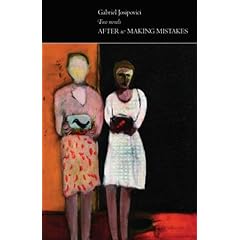
After & Making Mistakes, By Gabriel Josipovici

In his 2007 lecture "What ever happened to Modernism?", Gabriel Josipovici argued "the trouble with novels is that the only meaning they can have is that conferred on them by their authors". He added, "but what authority do they have to confer meaning? None, is the answer." He has been addressing this largely ignored Achilles' heel in a career that spans over 30 works of fiction, theatre and critical theory, in which he repeatedly calls for this "bad faith" of the novel to be acknowledged by authors and critics.

Josipovici's two new novellas, published in one beautifully produced book, are fine examples of a mode of fiction that does away with the "bad faith" of "meaning". They are written in the fragmented, action/dialogue-led style he has made his own, though applied this time with a lighter, semi-comic brio. This is a dialogue of action savvy enough to reveal that even a narrative of fragmentation retains its centre. In this case, it's an unnerving quiet despair, meaninglessness and charming politeness that is unmistakably British.

After is a fiction of conversations. Alan, an academic writing a book about François Rabelais, is rattled by the appearance of an ex-lover, Claude, whom he hasn't seen for over 15 years. Claude, who insists on calling him "Alain", is desperate to discuss a pivotal moment from their past, a car accident, that somehow marked the end of their relationship. This shared trauma is explored through the architecture of memory and repetition, where outcomes of the same event blur into a miasma of vacillation. The repetition of pithy exchanges between Claude and Alan/Alain, where the car crash is relived in a series of flirtatious provocations, wheel throughout the narrative as a reminder that it is fiction's possibilities at play and not any concrete actuality. This is a work of fiction after all. Yet the remarkable thing is that meaning is somehow created out of nothing. This lightness of touch, where each fragment of memory seeks its own alternative explanation, begins to show us the psychological complications of each character.

Continuing this lighter touch, Making Mistakes manages to make infidelity and separation strangely amusing through a series of polite and comic tête-à-têtes, mostly about relationships. An insouciant re-working of Mozart's opera Così fan Tutte, the novella centres on a group of middle-aged intellectuals. Charlie is cheating on his partner Bea, whose sister Dorothy is married to Tony, who in turn leaves his fiercely intellectual wife for his plain and "boring" secretary.
While Bea and Charlie project themselves as the classic "open" couple, Dorothy and Tony project a more outwardly harmonious union. The spanner is thrown into the works when Alfonso, a guest at Dorothy and Tony's dinner party, reminds everyone of a "little experiment" while they were all at university 15 years ago. It appears that Alfonso had orchestrated them to swap partners temporarily.

What follows is a comedy of decisions and accidental meetings, relayed in snappy, amusing dialogue which gradually unfolds into a parable for modern living. In both novellas, Josipovici has created a modern fiction that "feels caught between the pointlessness of mere surface and the pointlessness of mere depth", creating a space of endless discovery.

[original source: The Independent, Friday, 16 October 2009]

*

Tuesday, 9 February 2010

In Print(7) . . .

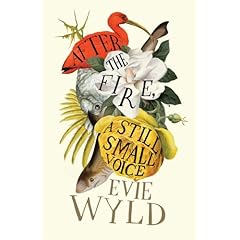
After The Fire, A Still Small Voice, By Evie Wyld

As in all catastrophe, war creates its own aftermath. It leaves in its wake all manner of human detritus – physical or emotional – alone to cope with its horrors in silence. Evie Wyld's debut novel attempts to decipher the trauma of war. Unfolding in eastern Australia, within an unrelenting landscape, After the Fire, A Still Small Voice tells the stories of fathers and sons learning to cope with the realities of wars they do not understand.

Following a miserable relationship, Frank moves to his grandparents' old shack by the sea. He tries to fit in with the local community, living off the land, drinking heavily and trying to make sense of his shattered life. Leon, the son of European immigrants, witnesses the breakdown of his family after his father returns from the Korean war a changed man, before finding himself conscripted as a machine-gunner in Vietnam – leaving him with no other alternative but to escape.

Landscape plays a major role in Wyld's writing. It opens up the narrative, creating an eerie metaphorical space, or silence, between each character, mirroring the physical and mental fissures that separate each generation. Although nothing is truly silent: even the landscape is "thick with insect noise". The power of this mesmerising novel hangs on the premise that silence is impossible, while such impossibility forces the men who litter its landscape to desire it all the more.

Frank seeks a silence his father and grandfather could never attain. Leon, like his own father, is seeking the same but, like the echo of a machine-gun, each reverberation hangs too heavily to ignore. Both are suspended in a present that doesn't belong to them. Within this space there is nothing to do other than look back at the catastrophes that have shaped their lives.

Wyld's writing is assured enough to elongate metaphor and symbolism, creating a novel both taut and otherworldly. This adroit examination of loss, lostness and trauma is the beginning of great things.

[original source: The Independent, Wednesday, 23 September 2009]

*

Monday, 1 February 2010

In Print(5) . . .

Dazed & Aroused, By Gavin James Bower

There exists within Gavin James Bower's canny novel an all-knowing shallowness that in lesser debuts would seem flawed. But to ignore, or worse still debunk, such wanton shallowness would miss the point of this critique of consumer society, especially one caught in the far-reaching web of the fashion world.

Following an already-jaded male model, Alex, on his rise to fame, we are allowed a flashing peek into a world most people only see within the covers of a glossy magazine. It comes as no surprise that life behind the super-hyped patina of the fashion industry is just as dismal as in any other substratum of society that demands the real from the unreal. Modelling, like most things trading in ephemeral charm, isn't all it's cracked up to be, especially if, like Alex, one is painfully aware of the facade.

Bower makes all this brilliantly clear in adroit, humorous flashes of insight, revealing a maddening world of myopia and sheer vanity. When Alex introduces his flatmate and fellow model, Andreas, we are instantly informed that he "is with Creative Model Management (like me), has medium to long blond hair and blue eyes (like me), and is tall and slim with a well-defined body (like me)". Alex, saving the novel from the same narcissistic affectation that permeates the whole fashion industry, adds: "I assume the agency put us together because they thought we'd have things in common."

Alex ums and ahs his way through a miasma of castings, photo-shoots, parties, women, men and pills, each as unsatisfactory as the next. In a world of ephemera, where everything has its price, there needs to be something solid to cling on to – and Nathalie, Alex's on/off girlfriend since university, is his foothold in life. But even Alex cannot control this centrifuge and things soon fall apart. Dazed & Aroused is an insightful debut from a novelist who already shows an ability to cut through the hype and reveal the dark heart of everyday life.

[original source: The Independent, Monday, 3 August 2009]

*

Tuesday, 26 January 2010

In Print(4) . . .

Caught by the River, Jeff Barrett, Robin Turner and Andrew Walsh (editors)

In Caught by the River, writers, musicians, environmentalists, anglers and poets contribute to a tranquil collection of accounts of time spent with a favourite river. "Rivers run through men," begins John Berry's "The River Alness", "as surely as they run through the landscape". The temptations of consumerism make it easy to forget the wonders around us. The river cuts through countryside and cities alike, gathering at its own pace towards the sea, offering solitude and respite.

Such is the strength of the emotional spell a river can cast, it comes as no surprise that the majority of the writing here concerns itself with the past. Passing generations are marginalised by gentrification and childhood adventures (with the obligatory father-and-son "bonding" yarn) take place in an idyll long disappeared. Such passing of time is evident in Robyn Turner's assured "Endless Summer" and Matthew De Abaitua's lament on the demise of the Liverpool docker, where "the engineering of man and nature" once complemented each other.

Childhood friendships are galvanised by an unsuccessful fishing trip for chub by the Wear in Ben Myers' exploration of place, "The Dirt Waterfall". But it's not all about the architecture of memory. Jarvis Cocker's "South Yorkshire re-creation of Apocalypse Now" is genuinely amusing, even when his River Porter voyage, "Acrylic Afternoons", becomes a metaphor for life.

There is much to glean from this collection, especially in the writing that eschews sentimentality and delivers a psychogeographical odyssey. Sue Clifford and Angela King's "The Language of Rivers" is a treat, as are the ever-knowledgeable Bill Drummond, Peter Kirby and Jon Savage.

The editors have shepherded a spirited and diverse collection of nature writing. Caught by the River taps into a growing unease with a present which is felt to be leaving us behind, and where the idyllic past we crave seems further from our grasp each passing day.

[original source: The Independent, Wednesday, 1 July 2009]

*

Wednesday, 9 September 2009

Competition Time . . .


*** COMPETITION TIME ***

The publisher of Evie Wyld's exceptional debut After The Fire, A Still Small Voice has sent me two hardback copies for review (check out my forthcoming review in The Independent). So one is up for grabs. I'll even post it to you free of charge. First person to email me the correct answer to the following question gets the book:


Where is After The Fire, A Still Small Voice Set:

a) Oldham

b) Hoboken, New Jersey

c) Australia

Email me at ljrourke9[at]hotmail.com

*

Blog Archive

Labels

2014 (1) 3:AM Magazine (1) 3AM Magazine (1) 4th Estate (1) aircraft (1) Amber (1) Andrew Gallix (2) Ann Quin (2) Art (1) Ben Myers (2) Book covers (1) Book Launch (2) Booker Prize (1) Bookforum (1) Boredom (1) Bram van Velde (1) Brighton (1) Broadway Books (1) Captain Beefheart (1) Carcanet Press (2) Central Station Design (1) Chris Killen (1) Competition (1) Dalkey Archive (4) Dante (1) Death (1) Dumitru Tsepeneag (1) Ellis Sharp (1) Events (1) Everyday Publishing (1) Evie Wyld (2) Gabriel Josipovici (5) Gavin James Bower (1) Georges Bataille (1) Gwendoline Riley (1) Hans Fallada (1) Harper Collins. (1) Hendrik Wittkopf (1) HP Tinker (1) Hubert Selby Jr (1) INS (1) Interviews (1) Jacques Roubaud (1) JD Salinger (1) Jean-Philippe Toussaint (4) JG Ballard (1) Jim Carroll (1) Joe Stretch (1) Jon McGregor (2) Jonathan Lethem (1) Karen Jackson (1) Kevin Cummins (1) Leda and the Swan (1) Light Boxes (1) List (2) Litro (1) LRB (1) Lydie Salvayre (2) Manchester United (1) Manifestos (1) Marion Boyars (1) Martin Heidegger (1) Melville House (11) Modernism (1) Myth (1) New Statesman (1) New Stuff (1) New York Times (1) Nick Cave (1) Noah Cicero (1) Not The Booker Prize (1) Novel (1) Olivier Pauvert (1) On Boredom (1) Pylons (2) Readings (2) Regent's Canal (2) Reviews/Criticism Archives (9) RIP (1) Samuel Beckett (3) Shane Jones (1) Sophie Lewis (1) Steve Finbow (2) Steve Mitchelmore (2) Stewart Home (1) Stuart Evers (1) Swans (1) Tao Lin (3) The Big Green Bookshop (1) The Canal (15) The Divine Comedy (1) The Failure Six (1) The Guardian (2) The Independent (6) The Quarterly Conversation (1) This Space (1) To Hell With Publishing (2) Tom McCarthy (3) Tony O'Neill (2) vapour trails (1) Vulgar Things (1) Yale University Press (1) Yeats (1) Zachary German (1)